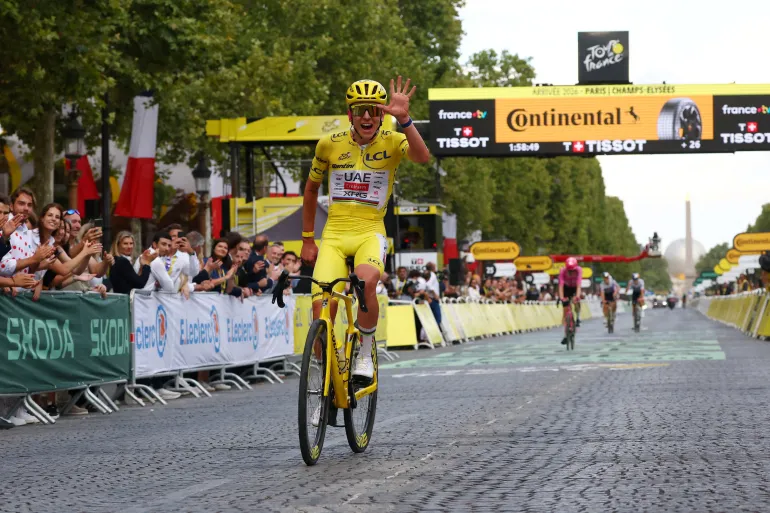

One of the riders viewed as a genuine medal contender has delivered a blunt warning ahead of the World Championship road race in Montréal: cyclists who launch long-range attacks simply because they want to imitate Tadej Pogačar could pay a heavy price before the finish.
The message goes beyond one tactical decision. Montréal’s punishing circuit is likely to reward riders who understand when to spend energy, when to follow and when to wait. A spectacular move made too early may look heroic on television, but it can also leave a rider isolated when the decisive moment arrives.
Pogačar’s attacks are more than pure instinct
Pogačar has made distant attacks part of his racing identity, but his success is not built on aggression alone. The timing of those moves, his reading of rival fatigue and his ability to keep producing power after the gap opens are equally important. Copying the visible part of his style without matching the conditions behind it is where the danger begins.
That distinction matters in Montréal. A rider can create a gap on one climb and still lose the race several kilometres later if the effort has emptied the legs. On a circuit that repeatedly tests the same group, every unnecessary acceleration becomes part of the final calculation.
Why the Montréal course can punish impatience
The World Championship race is not won by the first rider to show strength. It is won by the rider who can still make a decisive effort after the race has removed most of the available energy from the peloton.
That creates a tactical trap for ambitious attackers. A move from distance can force rivals to react, but it also gives the chasing group time to organise. If the attackers are caught, they may have spent the exact energy needed for the final climb, the last technical section or the sprint for the medals.
The debate around Evenepoel, Seixas and del Toro
Remco Evenepoel, Paul Seixas and Isaac del Toro are among the names connected to the wider tactical debate surrounding Montréal. Their presence adds different possibilities to the race, but none of them can assume that a Pogačar-style move will produce a Pogačar-style result.
The smart approach may be to use the threat of an attack without rushing to make it. A rider who forces rivals to hesitate can gain value from the idea of a move before committing to the move itself. In a championship race, making opponents spend energy is often as important as spending your own.
The Pogačar comparison still matters
Pogačar’s influence remains impossible to ignore, even when he is not part of the race. SportViaX has followed both the latest stage of his recovery in Tadej Pogačar’s return to the bike and the demands that come with being cycling’s central figure in the account of the pressure described by Tim Wellens.
His aggressive racing model is also examined in our look at Pogačar’s tactical approach and classic-race ambitions. Those examples underline the same lesson: aggression works best when it is supported by timing, condition and control.
A warning, not a prediction
The warning about riders trying to race like Pogačar should not be read as a prediction that every early attack will fail. A bold move can still transform the race if it comes from the right rider at the right moment. The point is that courage and calculation must work together.
In Montréal, the strongest rider may not be the one who attacks first. It may be the one who recognises which attacks matter, survives the cost of following them and keeps enough in reserve for the move that cannot be answered.