
Professional cycling may look like an individual sport, but success often depends on teamwork. A rider crosses the finish line alone, yet teammates may have spent hours protecting them from the wind, controlling the pace, delivering food, chasing attacks or preparing a sprint.
Why cyclists race in teams
Riding in a group can save energy compared with riding alone because riders behind others experience less aerodynamic drag. Teams use this advantage to protect a leader, position a sprinter, control a breakaway or set a hard pace on a climb. The exact strategy depends on the race profile, the team’s goals and the riders available.
In major stage races, a team may focus on the general classification (GC), individual stage victories, sprint points, mountain points or a combination of objectives. Our guide to general classification in cycling explains how the overall standings are decided.
The team leader
A team leader is the rider the team prioritises for a particular objective. In a Grand Tour, the leader may be a general-classification contender aiming for the overall title. In a flat stage, the team may instead work for its sprinter. A team can have different leaders for different stages, and plans may change when race conditions or results change.
Being the leader does not mean doing every job. The leader’s main responsibility is usually to conserve energy and deliver the decisive performance when the race reaches a key moment. Teammates help create the best possible conditions for that effort.
The domestique
A domestique is a rider who supports the team’s main objective rather than always racing for a personal result. The word is often used for riders who protect a leader, ride at the front of the group, fetch supplies or help bring back an attacking rider. Domestiques are essential to team strategy, and their work can be decisive even when it does not show up in the results table.
- Wind protection: riding in front of a leader so the leader can save energy in the slipstream.
- Pacing: setting a steady or hard tempo to control the race or reduce the number of rivals.
- Chasing attacks: helping close a gap when an opponent or breakaway becomes dangerous.
- Supply support: collecting bottles or food from the team car when race rules and conditions allow.
- Mountain support: helping a climber through difficult ascents by setting the pace or staying with them for as long as possible.
A strong domestique may be capable of winning races when given freedom. Their role is about team priorities, not a lack of ability.
The sprinter and the lead-out train
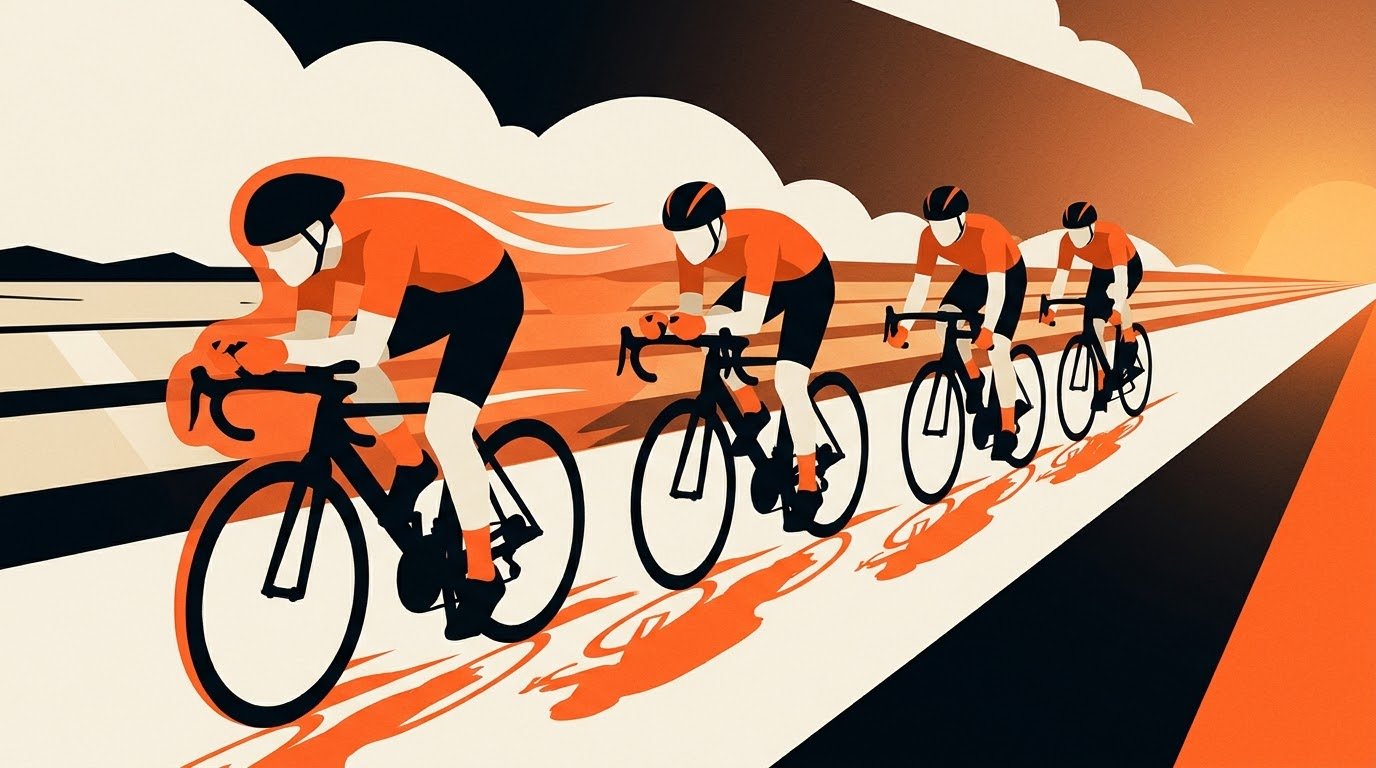
A sprinter specialises in producing very high power over a short distance. In a bunch sprint, teammates often form a lead-out train: they ride near the front and position the sprinter for the final acceleration. Each rider may take a turn at the front before moving aside, leaving the sprinter to launch near the finish.
Timing is crucial. If the lead-out starts too early, the sprinter may be exposed to the wind for too long. If it starts too late, the rider may be boxed in or lose the opportunity to accelerate. Road position, communication and trust are as important as raw speed.
Climbers, time-trial specialists and all-rounders
Teams select riders with complementary strengths. Climbers are often most effective on long or steep ascents, while time-trial specialists excel at sustained efforts against the clock. Classics specialists may be strong on cobbles, short hills and technical roads. All-rounders can handle several kinds of terrain and may be valuable throughout a stage race.
On a mountain stage, a team may place a strong climber beside its GC leader to maintain the pace and respond to attacks. In a time trial, the leader may need to rely more on individual pacing and equipment than on direct help from teammates. Teamwork looks different depending on the challenge.
Common tactics
Controlling the breakaway
A breakaway is a group of riders that moves ahead of the main peloton. A team that wants a sprint finish may help manage the gap so the breakaway can be caught before the line. A team with a rider in the breakaway may instead use it to seek a stage win or force rival teams to spend energy chasing.
Attacking on a climb
When a leader attacks on a climb, the goal may be to gain time, force rivals to respond or test their condition. Teammates can make the pace hard before the attack, leaving opponents with fewer helpers. An attack is not always successful, but it can change how rivals use their energy.
Crosswinds
Strong side winds can split the peloton into smaller groups. Teams try to position their leaders near the front and maintain contact with key rivals. A rider who loses the right group may have to spend a great deal of energy chasing back.
Sacrificing a personal chance
A rider may abandon their own chance of a result to support a teammate. For example, a rider in a breakaway might wait for a team leader who is chasing from behind, or a domestique may set a hard pace until they can no longer continue. These decisions can be decisive in the final kilometres.
Tactics in a Grand Tour
In a three-week race, teams continually adapt. A team protecting the overall leader may ride conservatively on one day and aggressively on a mountain stage the next. A team without a realistic GC chance may target breakaways and stage victories. Riders’ condition, time gaps, weather and the remaining route all influence the plan.
The Giro d’Italia, Tour de France and Vuelta a España each present different routes and tactical situations. Read our comparison of the three Grand Tours to see how their traditions and calendars differ. Our guide to the UCI WorldTour and team rankings covers the top level of professional road racing and how teams compete across the season.
Editorial note: Team roles and tactics vary by race, rider strengths and team strategy. Examples in this article describe common approaches rather than rules that apply to every event.