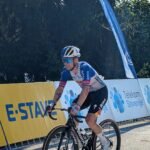


Former Spanish professional cyclist Delio Fernández Cruz has been sanctioned with a four-year period of ineligibility following an anti-doping rule violation established through his Athlete Biological Passport (ABP), the International Testing Agency (ITA) announced on 20 November 2026. The UCI Anti-Doping Tribunal issued its decision on 12 November. The sanction runs from 12 November 2026 until 11 November 2030 and includes the disqualification of individual results across two specified periods of his career.
What the ITA and UCI Anti-Doping Tribunal decided
In its official statement, the ITA said the Tribunal found that Fernández had committed an anti-doping rule violation under Article 2.2 of the UCI Anti-Doping Rules, relating to the use of a prohibited substance or prohibited method. The case was established through the Athlete Biological Passport rather than a single positive test announced in the statement.
The ITA explained that independent experts unanimously concluded that changes in the rider’s biological passport values were highly likely to have been caused by a prohibited substance or method. The findings concerned samples collected during the Vuelta a Portugal on 28 July and 5 August 2015, and on 15 and 17 August 2023. The official decision therefore concerns biological data from two separate periods, not a claim that a specific substance was identified in the public statement.
The four-year ineligibility period
The sanction began on 12 November 2026 and is scheduled to end on 11 November 2030. The ITA also confirmed a financial penalty equal to 70 per cent of the average gross annual income Fernández earned from cycling. Although the period of ineligibility is four years, the practical sporting impact is different from a suspension imposed on an active rider: Fernández had ended his professional career at the end of 2025, according to contemporaneous reporting.
The Tribunal ordered the disqualification of all his individual results in two periods: from 28 July 2015, the date of the first abnormal sample, until 27 July 2019; and from 9 August 2023 until the start of the ineligibility period. The exact wording and dates in the ITA statement are important because they define which results are affected. It would be inaccurate to describe the ruling as automatically erasing every result from the rider’s entire career.
Why the Athlete Biological Passport matters
The Athlete Biological Passport is a longitudinal record. Instead of relying only on the detection of a prohibited substance in one sample, it monitors selected biological variables over time and looks for changes that may indicate the use of a prohibited substance or method. The ITA said it manages the ABP programme in cycling on behalf of the UCI, working with the Athlete Passport Management Unit and a panel of independent experts.
That process is designed to assess patterns across multiple samples. In this case, the ITA’s statement says the independent experts reached a unanimous conclusion about the likelihood that the changes in Fernández’s passport were caused by a prohibited substance or method. The public statement does not identify a particular substance, and SportViaX will not speculate beyond the official findings.
The Tour of Austria result and the appeal process
Media reports have connected the disqualification periods to Fernández’s 2017 overall victory at the Tour of Austria and have discussed the possible consequences for the historical classification. However, the ITA’s public announcement is the primary source for the sanction and disqualification periods; it does not itself publish a revised Tour of Austria final classification or name a replacement winner. SportViaX therefore treats any change to the race’s historical winner as a separate classification matter that requires confirmation from the race organiser or the competent cycling authority.
The decision is also subject to appeal. The ITA stated that the rider and relevant stakeholders — including the UCI/ITA, the World Anti-Doping Agency and the rider’s National Anti-Doping Organisation — may appeal to the Appeals Division of the Court of Arbitration for Sport. This means the ruling should be reported as a Tribunal decision that is appealable, not as a decision that can no longer be challenged.
What happens next
The next key development would be any appeal and any official update to race classifications affected by the disqualification. Until those steps are confirmed, the precise and responsible summary is that Fernández has received a four-year period of ineligibility, a financial penalty and the disqualification of results during the two periods listed by the Tribunal. The ITA said it would not comment further on the case.
For readers following the wider professional cycling structure, SportViaX also maintains an overview of how the UCI WorldTour system works and a regularly updated 2026–2027 cycling transfer overview. These explain the sporting framework around teams and races, while this report focuses on the formal anti-doping decision.
Official source
This report will be updated if the CAS appeal process or an official revised race classification produces further confirmed information.
Why precise reporting matters in anti-doping cases
Anti-doping decisions require careful language because the consequences extend beyond a headline suspension. A biological passport case concerns the interpretation of longitudinal data by specialist experts and a tribunal applying the sport’s rules. It is therefore important to distinguish the tribunal’s formal findings from additional explanations offered by commentators or from speculation about substances that have not been identified in the official statement. It is equally important to state the exact dates of the disqualification periods, because those dates determine the results affected. The right to appeal must also remain visible in coverage while the decision can still be challenged. SportViaX will use the ITA announcement as the controlling source for the sanction and will update the article if an appeal or official classification decision is published.