

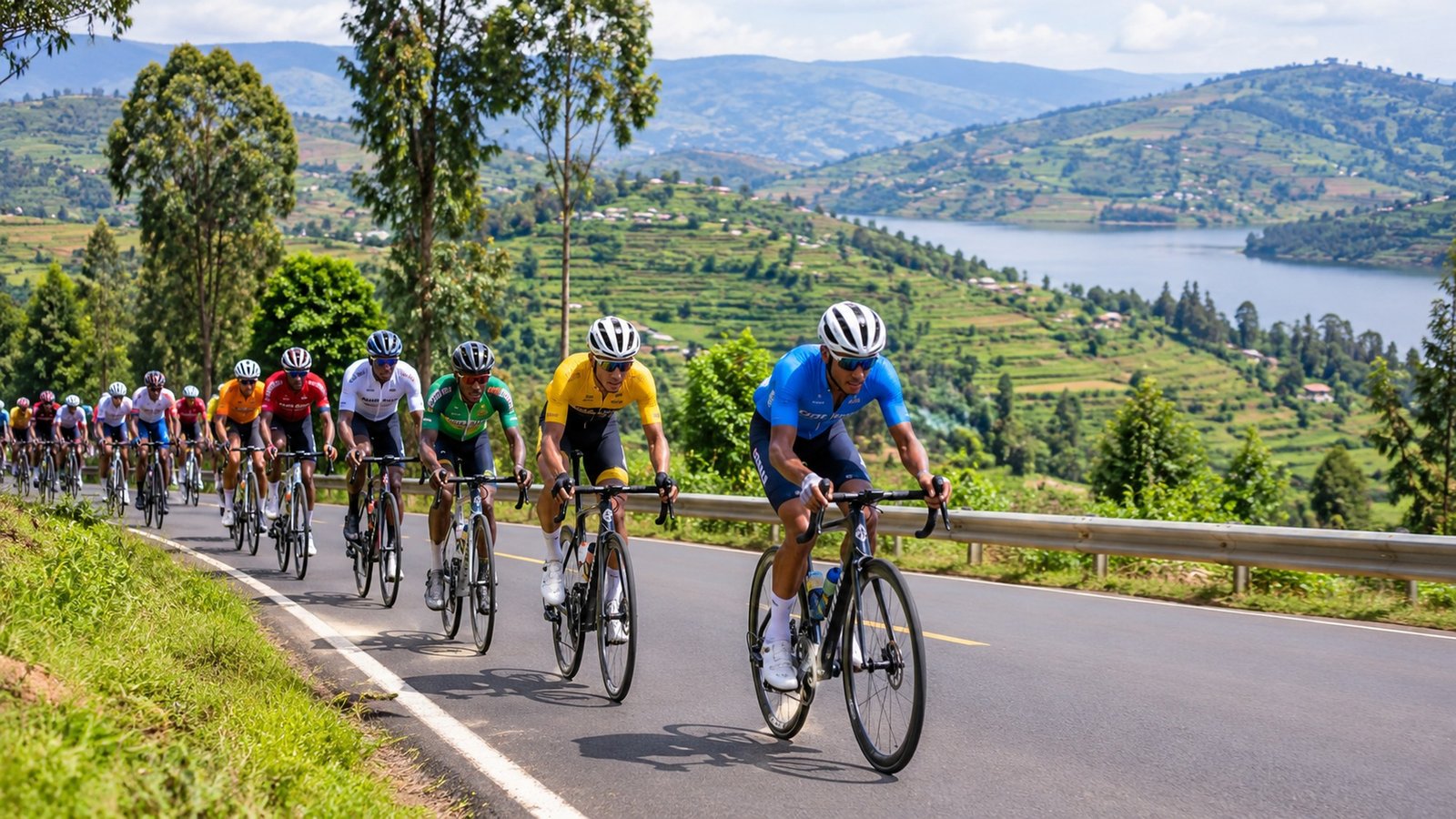
Tour du Rwanda 2027 will keep its eight-day racing window but introduce a different structure: two one-day Classics will be added around a six-stage UCI 2.1 stage race. The official race programme lists the opening One Day Classic for 19 February, the Tour du Rwanda from 21 to 26 February, and the Kigalian Classic on 28 February. The change gives riders and teams three separate opportunities to compete for UCI points during one Rwandan cycling festival.
Tour du Rwanda 2027: the confirmed dates and format
The organiser’s official 2027 edition page describes the programme as “three races” between 19 and 28 February. The first event is the One Day Classic on 19 February, listed over 111 kilometres. The six-day Tour du Rwanda follows from 21 to 26 February, with a published total distance of 919 kilometres. The programme then closes with the Kigalian Classic on 28 February, listed at 118.2 kilometres.
Across the three competitions, the organiser lists eight racing days and a combined distance of 1,025 kilometres, with 17,200 metres of total elevation gain. These figures describe the complete festival, not the stage race alone. That distinction matters for readers comparing the 2027 edition with previous editions that were presented primarily as a multi-stage Tour.
Why the two one-day Classics matter
The two Classics change the sporting incentives. A one-day race gives a rider a direct opportunity to target a result without needing to protect a general-classification position over several stages. It can also create a different tactical contest: teams can select a leader for a single-day objective, use a wider range of riders and pursue UCI ranking points even if their stage-race ambitions are limited.
According to reporting on the federation’s presentation, the format is intended to make the event more attractive to international teams by adding further ranking opportunities. The official programme confirms the event names, dates and distances; detailed route profiles, start lists and technical information should be checked again when the organiser publishes them. SportViaX will not treat provisional team speculation or unconfirmed route details as final entries.
The six-stage Tour remains the centrepiece
The main Tour remains a six-stage UCI 2.1 race. Its six days from 21 to 26 February sit between the two one-day events, preserving a compact stage-race format while creating a broader programme. The official page currently gives the total distance for the stage race as 919 kilometres. Individual stage routes and elevation profiles should be taken from the organiser’s final technical guide rather than inferred from previous editions.
Rwanda’s terrain gives the race a distinctive identity. The country’s repeated climbs, high-altitude roads and changing gradients can reward riders who combine climbing ability with recovery across consecutive days. However, the exact 2027 route will determine whether the general classification favours pure climbers, punchy stage racers or a more balanced all-rounder. Until the detailed profiles are available, it would be premature to identify a decisive queen stage or name a definitive favourite.
What the new format could mean for African teams
The revised structure is particularly relevant to African Continental teams. Two additional one-day races can provide more targeted opportunities to race for results and ranking points against international opposition. For developing teams, a one-day objective may be easier to plan around than a full week of general-classification defence, although the strength of the eventual start list will remain a major factor.
The wider development of African cycling is already part of the international calendar conversation. SportViaX has followed Team Amani Factor Racing’s 2027 plans, a useful example of the growing ambition among African-linked teams. Readers can also follow our 2027 cycling transfer overview for the broader team landscape that shapes the professional peloton.
What is confirmed — and what is still to come
Confirmed by the organiser: the three-race structure, the 19–28 February programme, the One Day Classic on 19 February, the six-stage Tour from 21–26 February, and the Kigalian Classic on 28 February, together with the published distances and overall elevation figure.
Still requiring confirmation: detailed stage routes, final start lists, team-by-team participation, stage profiles and race-day schedules. SportViaX will update this report when the official technical information is released.
Official sources
- Tour du Rwanda — official 2027 race programme
- The New Times — report on the format announced by FERWACY
SportViaX will continue updating its cycling news coverage as the organiser releases further details.
A wider platform for the 2027 African racing season
The revised programme also creates a clearer story for international audiences: the event is no longer only a six-day stage race, but a sequence of three competitions that can appeal to different rider profiles. A sprinter or classics specialist may target one of the single-day races, while a climber and stage-race leader can focus on the six-day Tour. For African teams, this structure may help with selection and race planning because riders can be assigned objectives that match their strengths. It does not guarantee a larger or stronger field, however. The final start list, team registrations and technical guide will determine the depth of competition. Those details should be treated as separate updates, not assumed from the announcement of the format.