

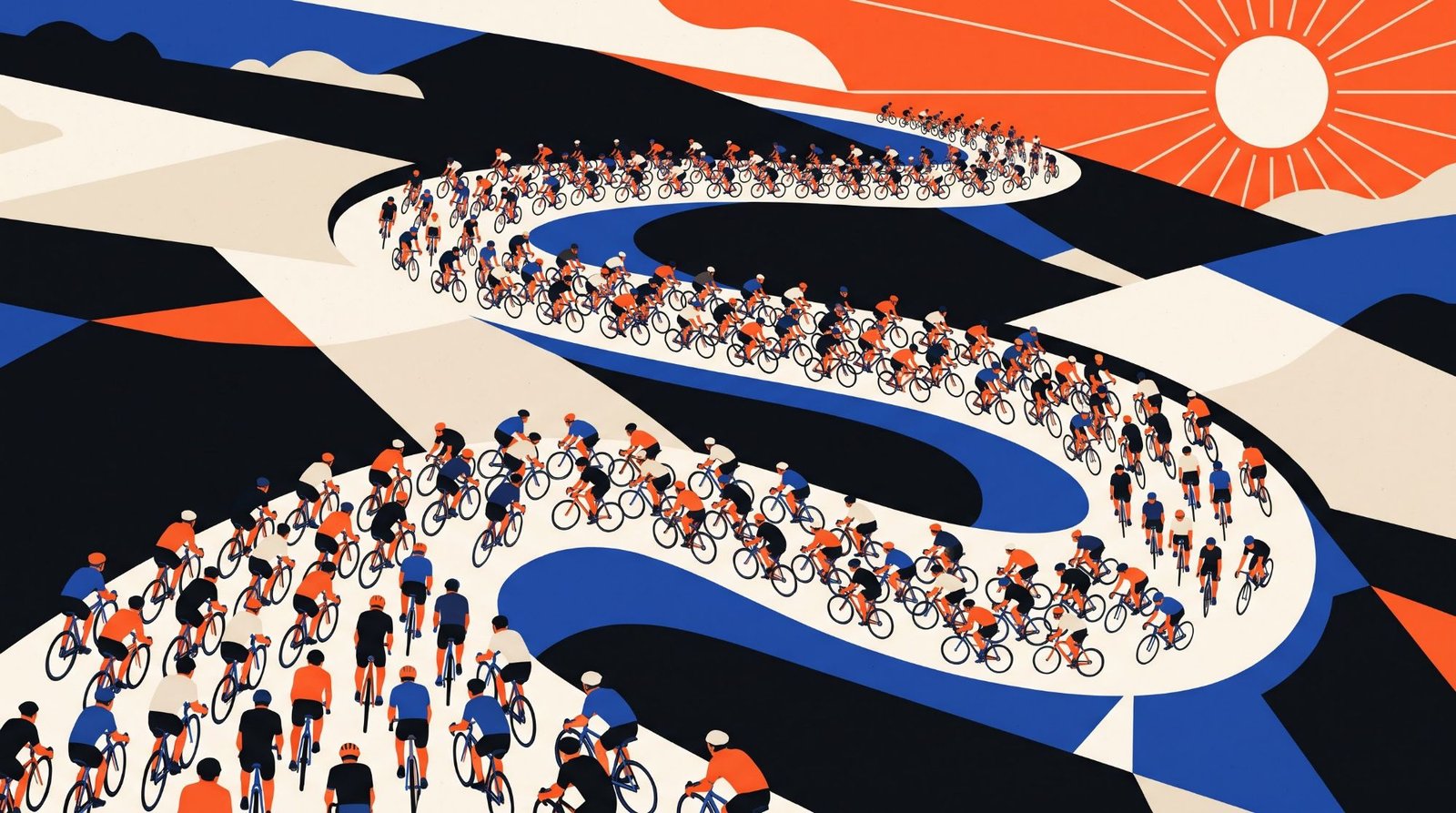
The UCI WorldTour is the top level of professional road cycling. It brings together leading teams and many of the sport’s biggest races, including the Tour de France, Giro d’Italia, Vuelta a España and the famous one-day Classics. It is a series of races held across the season, not a single event.
The WorldTour
The Union Cycliste Internationale (UCI) is cycling’s international governing body. The UCI WorldTour is its premier men’s road-racing series, featuring elite professional teams and a calendar of major stage races and one-day events. The women’s top-level series is called the UCI Women’s WorldTour.
WorldTour races vary in format. Stage races take place over several days, while one-day races are decided in a single event. The Tour de France is a three-week stage race, whereas Paris-Roubaix and Milan-San Remo are examples of one-day Classics.
WorldTeams
A UCI WorldTeam is a team registered at the highest level of men’s professional road cycling. Teams are made up of riders with different strengths, including general-classification contenders, sprinters, climbers, time-trial specialists and domestiques who work for their teammates.
WorldTeam status involves sporting, administrative, financial, ethical and organisational requirements set by the UCI. The teams at this level have access to the WorldTour calendar under the applicable participation rules. Other professional teams may also earn places in selected races through invitations and qualification rules. Winning a single race does not make a team a WorldTeam: registration depends on the UCI’s licensing and eligibility requirements, which include sporting and non-sporting criteria.
How the rankings work
The UCI publishes rankings for individual riders, teams and nations. Riders earn ranking points from eligible races, but the number available depends on the event and the result. Major races generally offer more points than smaller events, so a strong season can include consistent results across several types of racing.
- Individual ranking: compares riders based on points earned in eligible competitions.
- Team ranking: combines the points of riders according to the applicable UCI rules.
- Nations ranking: aggregates results from riders representing each country under the ranking rules.
Some UCI rankings use a rolling 52-week period, while team classifications and licence-related rankings can use different periods and criteria. Always check the specific ranking’s rules and update date before comparing totals.
WorldTour races are not the only races that award UCI points. Points can also be earned at other eligible events on the international calendar, including races at different levels and certain championships.
Why points matter
Points help measure results across the international calendar. Team rankings can also matter when the UCI assesses sporting criteria for WorldTour licences over a multi-year cycle. This gives teams an incentive to score consistently, not only through victories in the biggest races but also through strong performances throughout the season.
Points are not the only factor in a team’s status: the UCI also applies other registration and eligibility requirements. The exact system can change, so readers should consult the current UCI regulations for the relevant season.
The races
The WorldTour calendar includes different challenges throughout the year. Grand Tours test endurance and recovery over three weeks. The Monuments are five historic one-day races: Milan-San Remo, Tour of Flanders, Paris-Roubaix, Liège-Bastogne-Liège and Il Lombardia. Other stage races and Classics give riders opportunities suited to their strengths.
For a closer look at one of cycling’s most important stage-race concepts, read our guide to general classification (GC) in cycling. See also our Tadej Pogačar rider profile for an example of how an elite rider competes across major events.
Use the official UCI website for current rankings, regulations and announcements. This guide explains the general structure of the WorldTour. Check current UCI regulations for season-specific team lists, points tables and licensing criteria before relying on exact figures.